From London: Full-Day Cotswolds Small-Group Tour
- Iconic honey-stone villages — Bourton, Burford, Bibury, Stow
- Small group: more access to off-the-beaten-track stops
- Expert local guide with on-the-day village selection
A 25-mile sprawl of honey-stone villages with no direct train to most of them and no central town to arrive at. Pick 2–3 villages, choose your transport mode honestly, and stay out of Bibury and Bourton on summer Saturdays.
The Cotswolds is a designated Area of Outstanding Natural Beauty (AONB) — about 25 miles north-to-south across Gloucestershire, Oxfordshire, Wiltshire and Worcestershire. There is no central town. The region is a constellation of honey-coloured limestone villages, market towns, country pubs, and rolling sheep-pasture hills. It's been the most-photographed corner of England for a century, and in the social-media era that has tipped into genuine over-tourism in two specific villages (Bibury and Bourton-on-the-Water).
Honest reality check. Bourton-on-the-Water now sees ~300,000 visitors per year against a resident population of ~4,000, and has banned coaches from its central park. Bibury — population ~600 — receives up to 10,000 tourists per day in peak season and is actively considering coach restrictions. Castle Combe, often called "England's prettiest village," is removing illegally parked cars from Easter 2026 because they block emergency vehicles. None of this means you should skip the Cotswolds; it means you should pick when and where carefully.
There is no direct train to most Cotswolds villages. Plan around this.
Honest capsule reviews. The unwritten rule: visit 2 if doing it independently, 3–4 if on a guided tour, never more.
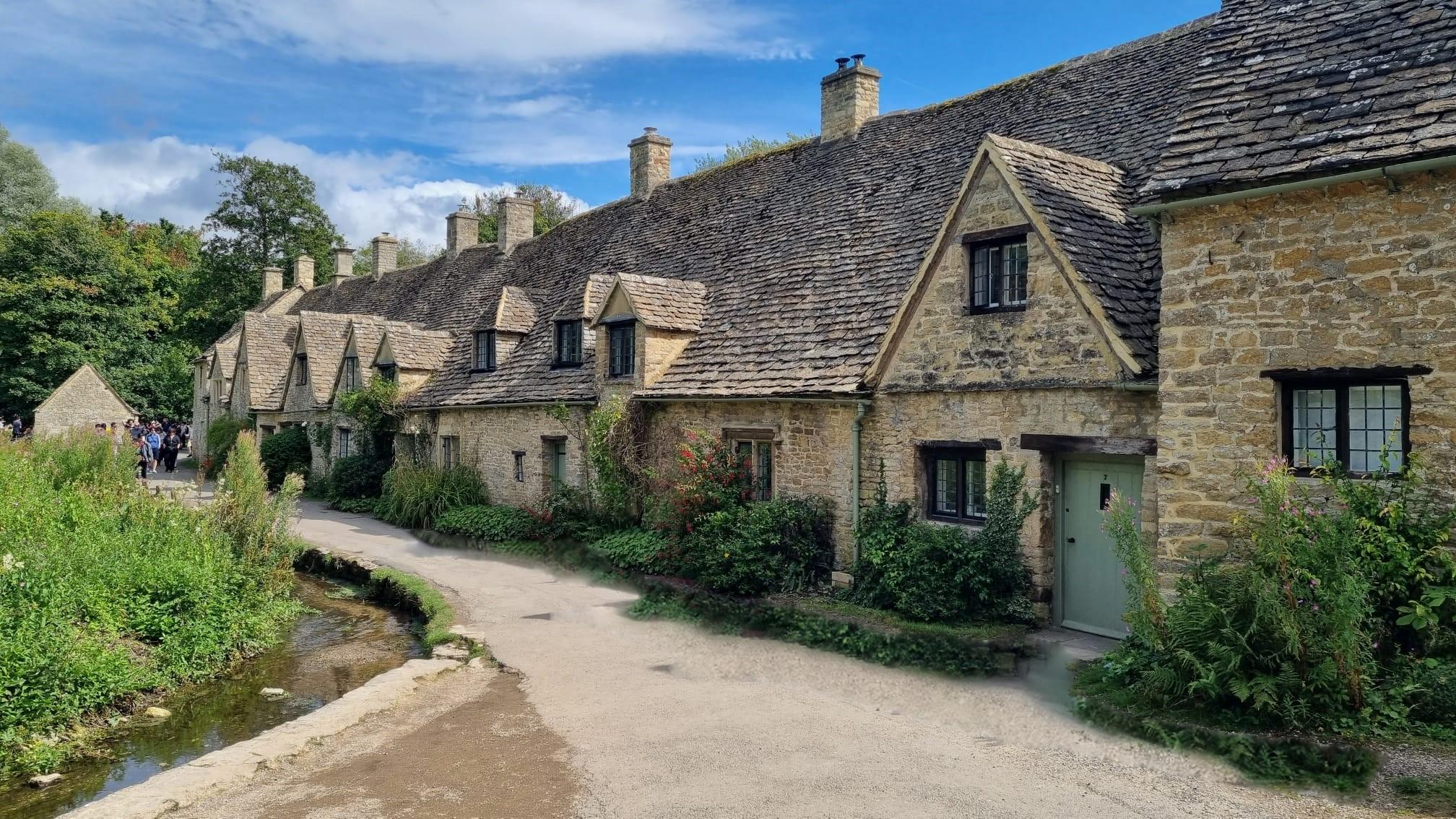
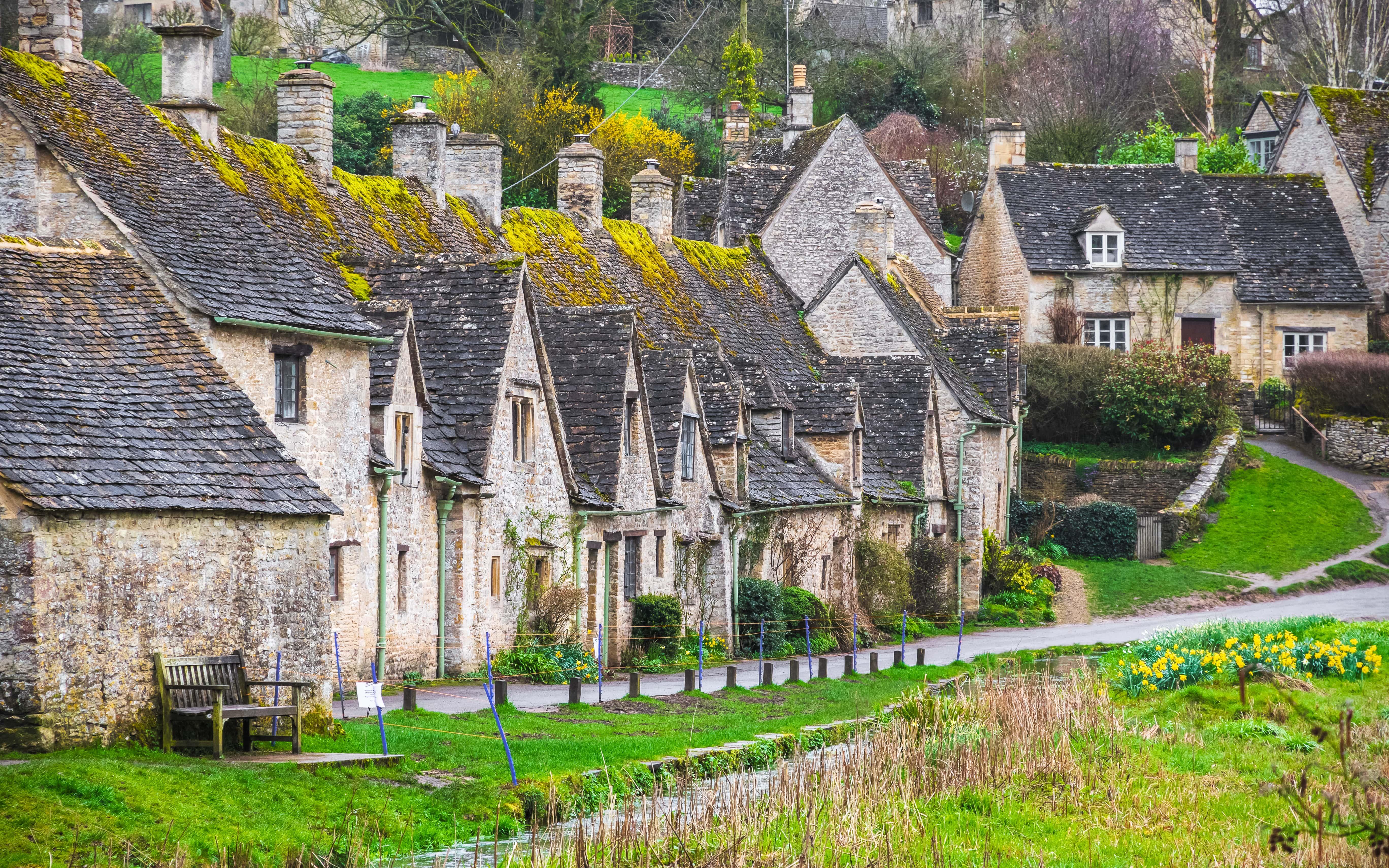
Arlington Row weavers' cottages, the trout farm, St Mary's church. Genuinely beautiful — and mobbed by 10 AM in summer. Coach restrictions under active discussion. Be there before 9 or skip.
Low bridges over the River Windrush, Model Village, Motoring Museum. Pretty but theme-park busy. Coaches banned from central park; park on outskirts and walk in. Quiet only before 9:30 AM.
Market Square, antique shops, St Edward's "Tolkien door" (the yew-flanked church door), the Royalist Hotel (one of England's oldest inns, 947 AD). The best base for a 2-day trip and the most manageable on a busy weekend.
Bybrook river, Market Cross, St Andrew's Church. Smallest, most chocolate-box of the lot. Tiny — no real high street facilities, parking very limited. Dunns Lane car park fills by 10 AM. Wiltshire Council removing illegally parked cars over Easter 2026 because they block emergency vehicles. No coach park.
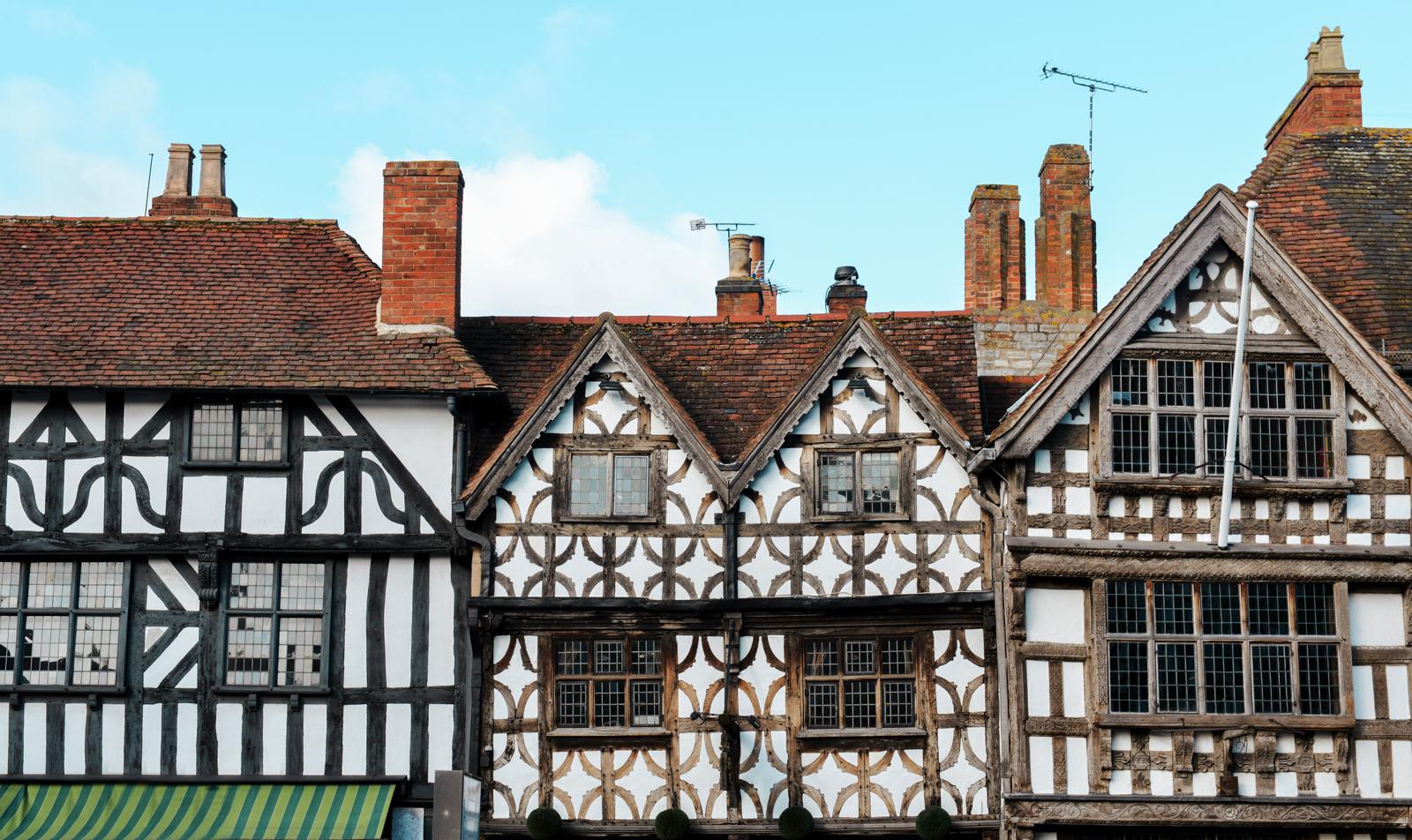
Preserved Tudor and Stuart-era high street, almshouses, Hidcote Manor garden nearby. Less touristy and more authentic than the famous names. Often the locals' first recommendation.
Theatrical sloping high street down to the Windrush. Independent shops, Huffkins bakery, the Norman church. Often called the prettiest high street in England.
Wide grand main street, gateway to Broadway Tower (16 counties visible on a clear day). The tower is a 30-minute hilltop walk — bring decent shoes.
The Old Mill, the mill pond, footpath from Bourton (~25 min). No facilities, no parking — that's the point. The mill pond on The Street in Lower Slaughter before 9 AM is one of the best photographs in England.
Lambs in fields, daffodils, Easter events at the Cotswold Farm Park, Birdland chick hatchings. Mild (10–18°C). Crowds manageable except Easter weekend and May half-term.
Long evenings, peak greenery, lavender at Cotswold Lavender (mid-June to mid-August). Visit midweek and pre-9 AM only. Sudeley Castle open daily 14 March – 1 November (no Monday closure as 2024 advice suggested).
Golden foliage, harvest, cooler air, prices drop after early September. Crisp 8–15°C. Fewer crowds, better light.
Christmas markets, festive lights, log fires, dramatic price drops January and February. Almost no queues. Some country attractions (e.g. Sudeley Castle) close 2 November – mid-March; check before going.
Most pubs serve lunch 12:00–14:30 and dinner 18:00–21:00 — the kitchen closes between. Arriving at 15:30 hungry means a packet of crisps. Plan around it. The eight below are confirmed operating in 2026.
AA-rosette restaurant, famous Sunday roast. Solid lunch stop midway between villages.
Open-fire cooking, very design-forward. The dining room is genuinely "an extra in a Guy Ritchie film." Note: chef Sally Abé departed January 2026 — kitchen leadership in transition.
Organic farm-shop, café and restaurant complex. Lunch or takeaway. The de-facto Cotswolds "see and be seen" stop.
Modern British in a 17th-century setting on Sheep Street, Burford. Good for a sit-down lunch.
Cream teas, scones, no-fuss. Best value sit-down in the region for a 30-minute coffee stop.
Pub food, atmospheric beams, real fires. Worth a meal even if you're not staying overnight.
Two restaurants in a 17th-century building. Reliable, modern British, family-friendly.
Wood-fired country-house cooking. Worth the detour for dinner if you're extending overnight.
Three villages, no taxis, total under £40.
No logistics, but light stops at each.
You will see two properly. Pick depth over breadth. The most common regret in Cotswolds reviews is "we tried to do too much."
Crowds, parking misery, no atmosphere. Bibury at 11 AM on a sunny Saturday is a Disney queue without the ride. Either go before 9 AM, on a weekday, in shoulder season — or pick a quieter village.
Dunns Lane car park fills by 10 AM in summer. Easter 2026 has an active vehicle-removal programme for illegally parked cars (they block emergency vehicles). No coach park, no big-village facilities.
Most close the kitchen 14:30–18:00. Mid-afternoon hunger means tea-room cake or nothing. Plan lunch early.
Outside the Moreton/Stow/Bourton 801 corridor, DIY public-transport plans collapse. If you want Bibury, Castle Combe, or Chipping Campden, you need either a car or a guided tour. Don't try to bus-stitch them.
It largely does not operate in the Cotswolds. Don't plan an inter-village hop expecting a 5-minute ride.
It's a hamlet. No supermarket, limited cafés, tiny pubs. Beautiful but bring a snack and mind the parking.
Sudeley Castle, for example, is open daily 14 March – 1 November 2026 only — closed for the winter. The risk is showing up in January, not "closed Mondays" (an out-of-date warning that no longer applies).
For visitors without a car, a guided minibus tour is by far the most efficient way to see 4–5 villages in a single day. Top picks below — sorted by review count, sourced from our full Cotswolds tour catalogue.
The Cotswolds + Oxford is the most popular pairing — half-day Oxford + half-day Cotswolds works on a guided tour. Stratford-upon-Avon is the other natural pairing on the northern edge.
Burford is closest to Oxford. Many tours combine Oxford with 1–2 Cotswold villages. See Oxford tours →
North end of the Cotswolds. Common combo on full-day tours — Cotswolds + Stratford runs from £175.
On the Oxford-Cotswolds route. Often paired with Burford and Bourton on commercial day tours.
The actual filming village ("Downton") is Bampton, on the southern edge of the Cotswolds — many cheaper combo tours visit Bampton, not Highclere itself. Highclere Castle is in Hampshire (south of the Cotswolds), with limited dates and ~£100 admission.
Yes, if you set realistic expectations: 2–3 villages in a day, not the entire region. Avoid summer weekends in Bibury and Bourton-on-the-Water (overrun by 10 AM). The 95-min direct train from Paddington to Moreton-in-Marsh is the realistic backbone for DIY trips; a guided minibus tour from London is the simplest option for visitors without a car.
Stow-on-the-Wold for atmosphere and manageable crowds, Bourton-on-the-Water for the postcard-pretty riverside, Bibury for the iconic Arlington Row photo. Most first-timers pair Bibury and Bourton — but go before 9 AM in summer or skip them entirely.
Yes — but only the Moreton ↔ Stow ↔ Bourton ↔ Cheltenham spine via the Pulhams 801 bus (hourly Mon–Sat, two-hourly Sundays as of the 2024/25 timetable). Outside that corridor — Bibury, Castle Combe, Chipping Campden, Broadway — you need a guided minibus tour from London, a taxi, or a car.
Advance-booked Paddington train to Moreton-in-Marsh (from £14 one-way), then the Pulhams 801 bus + walking. Total under £40 for the day. Sticks to the Moreton/Stow/Bourton corridor — don't try to reach Bibury or Castle Combe this way.
Two properly. Three if you keep moves tight. Four only on a guided tour with brief photo stops at each. Pick depth over breadth.
Both — Arlington Row is a genuine architectural marvel from the 1380s. But the "nice" version exists only before 9 AM or out of season. By 11 AM on a summer Saturday it is a Disney queue without the ride. Up to 10,000 tourists per day descend on a village of ~600 residents in peak season.
Pubs for proper meals (12:00–14:30 lunch, 18:00–21:00 dinner — the kitchen closes between). Tea rooms for cream tea and cake at any time of day. Huffkins is the easy default for the latter.
Yes for popular operators in summer, especially Bank Holidays. Free-cancellation options on GetYourGuide and Viator make early booking risk-free.
Two options. Cheap: visit Bampton — the filming village, free, on many Cotswolds tours, on the southern edge of the region. Expensive: book Highclere Castle itself in Hampshire (~£100 admission, limited dates released only 5–6 months ahead, sells out) — usually paired with the Cotswolds on premium specialist tours. Highclere is not in the Cotswolds — it's south, in Hampshire.
Autumn wins for serious visitors — golden foliage, harvest light, smaller crowds, lower hotel prices. Summer wins only for green landscapes and long evenings. October is many locals' favourite month.
Arlington Row at dawn (Bibury), the mill pond on The Street in Lower Slaughter before 9 AM, Broadway Tower at sunset, the top of Burford's high street looking down to the river, the yew door at St Edward's Church Stow-on-the-Wold (the "Tolkien door").
Stow-on-the-Wold is the most central base — try The Porch House (claims to be England's oldest inn, c. 947), The Old Stocks Inn, or Number Four at Stow. Chipping Campden suits travellers wanting Cotswolds atmosphere without crowds. Burford suits those wanting easy A40 access back to London. Avoid Bourton as a base — too touristy after dark.
Sourced from the Pulhams Coaches 801 timetable, GWR, the Cotswold Line Promotion Group, Visit Cotswolds, restaurant operator sites, and aggregated visitor reviews. Two notable corrections from older guides: the Pulhams 801 was upgraded to hourly in 2024 (no longer "infrequent purgatory" for the Moreton–Stow–Bourton corridor), and Sudeley Castle is open daily 14 March – 1 November 2026 (the "closed Mondays" advice no longer applies — the real risk is winter closure). Tour cards link to GetYourGuide affiliate URLs; we earn a commission at no cost to you, which keeps this guide free. ← Back to the full London day-trips guide
Last updated: